Tips to Avoid Scam
HELPFUL TIPS TO AVOID SCAMMERS

Updated: June 16, 2026
Avoiding Scammers on Leolist & Shemale Canada
I’ve created this section to help kind gentlemen stay safe and avoid falling victim to scammers. Here you’ll also find practical advice on how to protect yourself if you ever find yourself in a difficult situation.
Service providers normally include their current location in their ads on both Leolist (LL) and Shemale Canada (SMC). SMC has active moderators who can quickly ban or remove fake accounts once they’re reported or discovered.
However, the situation is very different on Leolist, where scamming is unfortunately rampant. In the next part, we’ll break down exactly how these scams typically work on LL and what you can do to spot and avoid them.
Pay close attention to this suspicious scammer in LL Ad as an example, shall we?
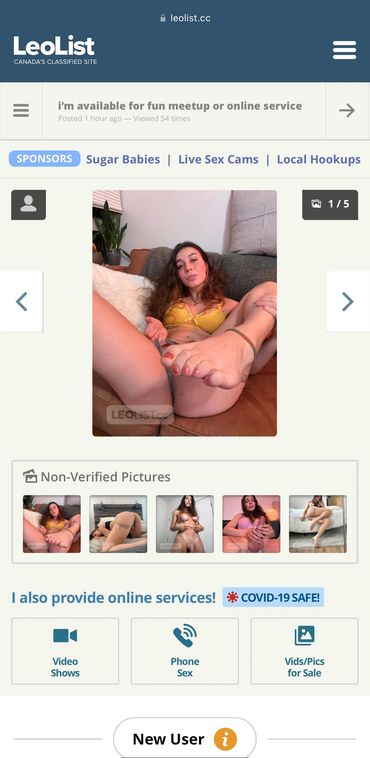
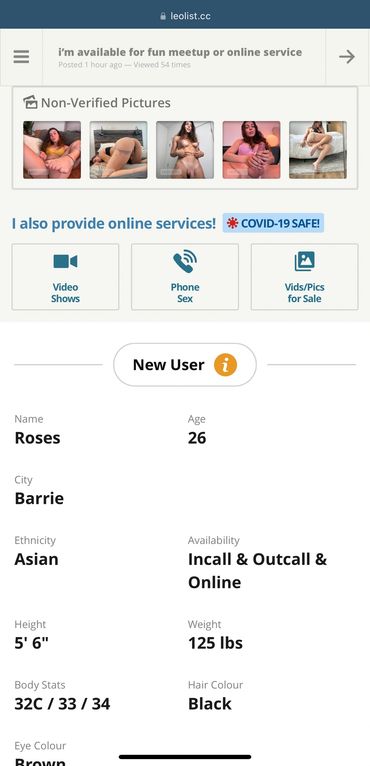
Apparently, she is located in Barrie, Ontario

▶️How to Spot Fake Ads on Leolist
Real service providers normally include their current city and the date they will be there. This is standard practice. When I’m not working or I’m away on holiday, I always update my schedule on my website and Shemale Canada account, and I disable all my Leolist ads.
▶️Verification method:
To assess the legitimacy of an advertisement, scroll to the bottom of the ad page. This section displays the total number of advertisements posted by that provider. Genuine providers generally post in one location at a time. When relocating, they typically advertise only in their current city or a nearby area for improved visibility. They may also post advance notices with clear details regarding their upcoming location and schedule. It is important to review the current location, advertisement title, and description for consistency.
▶️Key indicators of potential fraud:
Exercise caution when an advertisement appears in multiple distant cities simultaneously without specific dates or detailed location information. For example, an active ad in Toronto alongside others in Montreal, St. John’s, and Edmonton at the same time raises significant concerns, as a single provider cannot realistically be present in several distant locations concurrently.
In many cases, such advertisements also feature inconsistent or entirely different photographs across locations, which is a common tactic used by fraudulent accounts.
Check the bottom of the Ads to see how many ads posted

▶️Suspicious Advertisement Claiming to Be in Barrie, Ontario:
This advertisement indicates that the provider is currently located in Barrie, Ontario. At the bottom of the ad page, the total number of active postings associated with this account is displayed.
We will now examine the details of this listing more closely to identify any potential red flags.
There you go — a totally different girl from the first ad, and she’s in Hamilton. Lol 😂
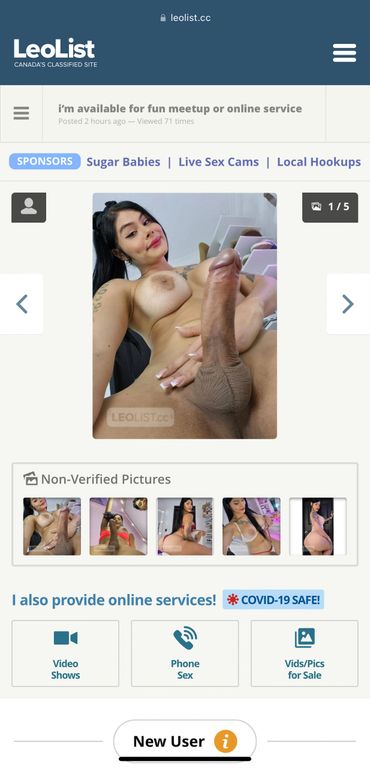
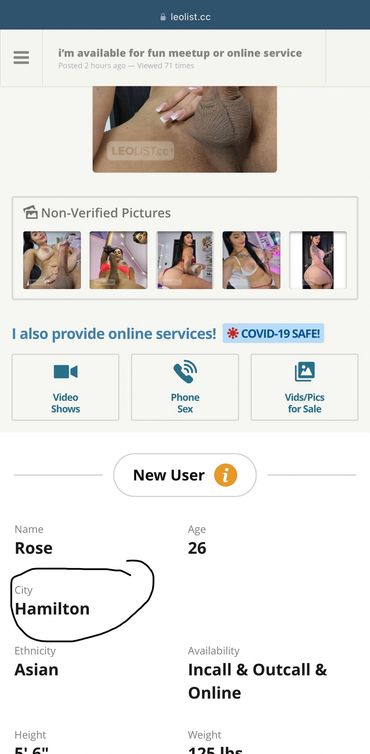
This suspecting scammer has 4 active ads in Barrie-Hamilton-Winnipeg-Kitchener - What do you Think? Real Or Fake? Lol
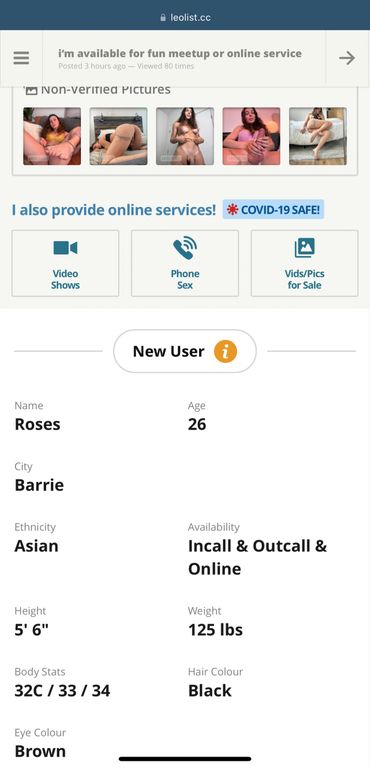
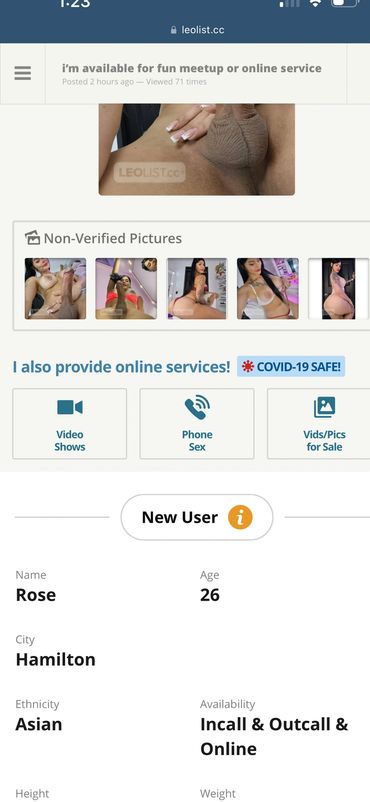
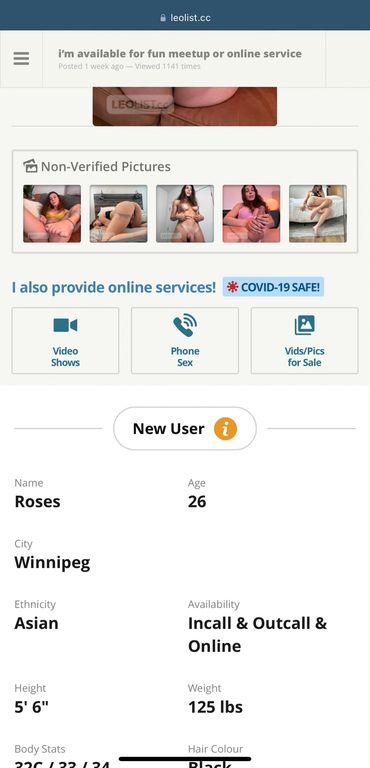
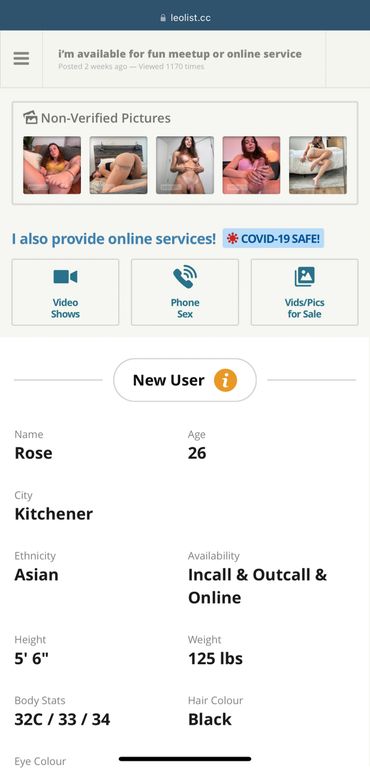
Scrutinize the ads, views, location and other ads below
▶️When an Ad Has No Other Postings
If an advertisement shows no other postings at the bottom of the page, evaluate it with extra care.
Review the photos and videos
Examine the images closely. Are they overly polished or “too good to be true”? Are there only a few photos, or none that include video? These details can be important warning signs.
Check the ad views
Look at how many times the ad has been viewed. A new, legitimate ad will typically show limited views. However, an ad with unusually high view counts combined with questionable photos may indicate manipulation and should be treated with caution.
Verify the phone number
This is one of the most important checks. Scammers frequently use fake internet-based numbers because they can be created and changed easily without providing real identification. It is helpful to know how to identify these numbers.
You can verify a number using free tools such as the Truecaller app, Lookup, or Canada411 (yellowpages.ca). These services can help distinguish between legitimate cellphone numbers and internet-based numbers commonly used by scammers.
▶️Scammers often believe they are being clever, but many fake advertisements are relatively easy to identify with careful attention. After reviewing numerous listings, the differences between genuine and fraudulent ads become clear.
In recent cases, some fraudulent ads have included videos or obtained “verified” status on Leolist. It is important to note that verification on the platform can be achieved without showing a face — typically by submitting a body photo with a handwritten “LL” note.
Even with these additions, always verify the phone number using a tool such as the Truecaller app. This will help determine whether the number is a legitimate cellphone number or an internet-based number commonly used by scammers.
Use Free Apps like Truecaller, Reverse Lookup and Canada411 (yellowpages.ca)
Use Free Apps like Truecaller, Reverse Lookup and Canada411 (yellowpages.ca)

▶️Truecaller is a free app that helps identify whether a phone number is a legitimate cellphone number or an internet-based number. Free alternatives include Lookup and Canada411 (yellowpages.ca).
Internet-based numbers, such as those provided by Iristel and Distributel, are commonly used by scammers. These numbers can be created and changed easily without requiring real identification. Scammers generally avoid using actual cellphone numbers because they require verified personal information and can be traced. Their priority is to remain anonymous and avoid detection.
▶️Scammers often rely on Voice over Internet Protocol (VoIP) numbers because they can be inexpensive, easy to obtain, and may offer greater anonymity than traditional phone services. Some VoIP providers require little verification, allowing fraudsters to quickly acquire new numbers when old ones are blocked. VoIP technology can also be used alongside caller ID spoofing to make calls appear local.
However, it’s important to note that VoIP itself is a legitimate technology widely used by businesses and individuals; the problem is the misuse of the technology by criminals.
Ok Lets Dig Deeper
Stay Curious. Stay Skeptical. Stay Safe. You Got This!
Awareness Creates Knowledge. Empowerment Creates Protection.
Scammers excel at psychological manipulation: creating urgency, authority, reciprocity, exploiting your kindness and take advance of your vulnerability. They prey on emotion, not intelligence. They are not smarter than you—they simply count on you not checking.
Exact numbers of male scam victims are impossible to determine precisely due to widespread underreporting, where embarrassment, shame, fear of judgment, or the belief that “nothing will be done” prevent people from coming forward.
Scammers don’t rely on victims knowing (or not knowing) about underreporting statistics. They exploit universal human vulnerabilities: trust, loneliness, hope, greed, fear, or urgency. Romance/investment scams, “pig butchering,” impersonation, and tech support scams succeed because they build emotional or financial pressure over time. Awareness of low reporting rates doesn’t protect against sophisticated manipulation—many victims only realize it was a scam after significant losses.
The good news: YOU ARE NOW AWARE. The moment you pause, verify, and refuse them, you have already beaten them.
Awareness Creates Knowledge. Empowerment Creates Protection.
Awareness Creates Knowledge. Empowerment Creates Protection.
▶️Now consider the earlier example of the advertisement claiming to be in Barrie. Further investigation may reveal additional active ads in Hamilton, Winnipeg, and Kitchener, along with the use of multiple phone numbers. Checking these numbers on verification apps often produces surprising results.
▶️Exercise caution if a provider requests an advance deposit through e-transfer or a gift card. Scammers often invest in creating convincing advertisements to reach and target more people.
▶️As mentioned above, when checking a number on Truecaller, Lookup, or Canada411, review the “usage” section. It will typically indicate whether the number is listed as a mobile or cellphone (suggesting a real number) or as a landline or internet-based number.
▶Reverse image search (Google Lens,TinEye or Yandex) Scammers frequently steals photos of models or any good good looking random people. Investigate before you approach.
▶️ Google Voice numbers are another common form of internet-based number (VOIP). These numbers rely on a stable internet connection to function and are frequently used because they can be created without traditional identification.
For the most reliable results, it is recommended to check the number across all three apps.
⚠️Disclaimer⚠️
The results provided by these apps may vary and are not always completely accurate, particularly regarding the name displayed with each search. However, the apps are generally reliable in indicating whether a number is a legitimate mobile or cellphone number or an internet-based number.
When reviewing the “usage” section:
• “Mobile” or “Cellphone” typically indicates a real number.
• “Landline” or “Phone number” typically indicates an internet-based number.
It is your responsibility to use these tools with discretion. The information shared in this guide is based on personal experience and is intended to help you identify internet-based numbers and protect yourself from potential scams.
This content is shared with the goal of helping you stay safe. If you have additional tips, best practices, or other useful apps for verifying numbers, please feel free to message me anytime.
Tips to avoid Scammers Part 2

▶️ Your are at the door, what to do?
When the provider opens the door, don’t step inside right away. Take a moment to verify who’s actually there. What if the person doesn’t match the photos from the ad? You could find yourself face-to-face with someone completely different — for example, a large-bellied, hairy man in a wig who was hiding just behind the door. By that point you’re already inside their space, and backing out safely can be difficult.
Instead, stand your ground and ask them to step forward or show their face first. Only enter once you’ve confirmed it’s the right person and you feel comfortable proceeding.
▶️ What to do if you’re already inside and it’s clearly a bait-and-switch:
If you walk in and immediately realize the person doesn’t match the photos at all (for example, someone completely different is blocking the door and trying to act seductive), stay calm and act quickly.
Do not get aggressive or start arguing. Instead, keep your tone neutral and firm:
• Say clearly: “This isn’t what I expected. I’m leaving now.”
• Or simply: “Sorry, this doesn’t match the ad. I’m going.”
Walk toward the door while repeating the same short line if needed. If they’re blocking your exit, politely but directly say: “Please step aside. I’m leaving.”
Important: Do not hand over any money — not even “a little something for your time.” Once you pay in a scam situation, it becomes much harder to leave cleanly. You were already misled; you don’t owe anything.
If they refuse to move or start demanding payment, stay calm and keep repeating that you’re leaving. In most cases they’ll eventually let you go because they don’t want real trouble either. Keep your phone ready in case things escalate — you can call for help if it turns physical.
Your instinct to leave immediately without paying is the right one. The key is to stay low-energy and polite while still being direct and moving toward the exit.

▶️ She may try her best to scare or intimidate you, but stand your ground. “Try a little harder, pal — not today, TS Shrek!” She might get furious, veins popping in her temples like an angry lion, but you don’t have to care.
If she demands money after the obvious bait-and-switch, that’s not a real “donation” — it’s a SCAM.
Physically holding you in the room against your will can amount to forcible confinement(a serious criminal offence in Canada, sometimes called illegal detention). Any physical harm would be assault. Demanding payment in this situation is more accurately described as fraud or extortion rather than classic robbery, but the bottom line is the same: you don’t owe her anything.
▶️These scammers are often cowards who feed on fear. Keep a poker face. Show no emotion except your clear intention to leave. Ignore the provocations, walk straight out of the room, and treat it as a lesson learned.
The same caution applies to outcalls. Never invite a service provider to your home or hotel without doing proper screening first. You don’t want “Shrek” showing up at your door — that would be a disaster. These people make money by tricking others. Don’t be their next victim
▶️Door Security
Once inside the room, proactively lock the door or politely ask the provider to lock it using the security lock or chain. This ensures that no one else can enter the room with a spare key or keycard.
▶️Money Safety
Bring only the agreed-upon donation amount. Avoid carrying large sums of cash, your full wallet, savings, or retirement funds. If possible, leave your wallet in your car and bring only the necessary funds with you.
▶️Protecting Your Belongings
Never leave your personal items unattended, especially when using the bathroom. Stay aware of your surroundings and avoid becoming overly relaxed or complacent during the meeting.
▶️Sharing Personal Photos
Avoid sending your photo unless you have established a high level of trust with the provider after multiple meetings. Sending personal images to someone you have not yet met carries potential risks. Exercise caution and use your own judgment.
▶️E-Transfer Safety
Never send an e-transfer to a provider you have not yet met. This is strongly recommended for your protection. This is the Holy Grail. - Never ever send money. Trust me - I know this so well.
When an e-transfer is completed, the sender’s full name and bank details become visible to the recipient (and vice versa). Sharing this personal and financial information with someone you have not met in person carries unnecessary privacy and security risks. It is always safer to handle donation in person after the meeting has been confirmed.

My Anti-Scam Awareness Campaign
Scammers Galaxy

Scammers will likely always exist in some form, but their success depends on people remaining unaware of their tactics. The best defense is education, awareness, and the willingness to speak up when something suspicious occurs.
By sharing this information and warning others, we make it harder for scammers to find victims. Learning to recognize red flags—such as pressure tactics, fake identities, demands for deposits, threats, or requests for unusual payment methods—helps people differentiate between legitimate individuals and fraudsters.
REMEMBER: Scammers rely on secrecy, fear, and confusion. Awareness, verification, and open discussion take away much of their power.
Stay alert. Verify first. Trust your instincts. The more informed we are, the harder it becomes for scammers to succeed.
Safety Before Rivalry
It is not customary for many escorts to rub elbows or socialize closely with one another. Most work independently, maintain strict privacy, and focus on running their own business.
Many providers are selective about who they associate with, especially when someone is involved in behaviour that could create risks for others. This may include dishonesty, competition, scams, illegal activity, substance abuse, or conduct that damages trust within the community.
Frequently providers have been pitted against one another by customers, gossip, misunderstandings, and unnecessary drama. Comparisons, Jealousy, Rumours, and Rivalry can sometimes create division where none needs to exist.
I will always be an ally
I will always be an ally
Awareness grows when people share information, support one another, and learn from each other’s experiences. Silence protects scammers, but communication protects potential victims.
I think we do not have to be close friends to look out for one another. Sometimes a simple warning can prevent someone else from becoming the next victim.
My advocacy is raising awareness about online scams and helping people protect themselves from fraud. I encourage people to verify information, recognize common scam tactics, and avoid making decisions based on fear, pressure, or intimidation. Through education and awareness, I hope to help prevent people from becoming victims of online scammers.